
Why don’t I care about the World Cup?
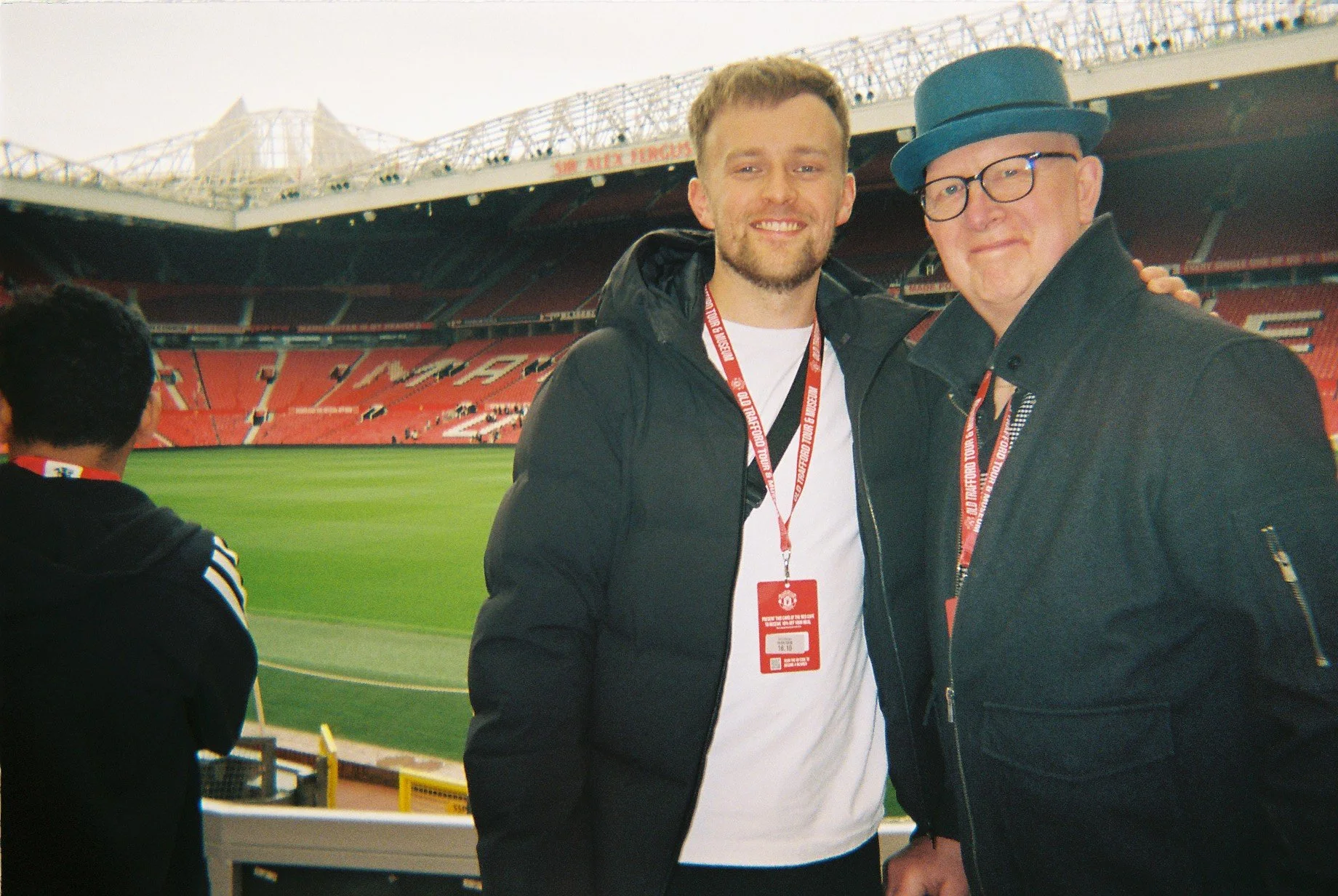
Wikipedia doomscrolling
Growing up, I can’t say I was the most avid football fan. I chose to support Arsenal because my next-door neighbour supported them and wanted to be different to my Man Utd supporting Dad and Brother. I was never any good at football and struggled to really get into the excitement that so many others seemed to. That changed when I was 10 years old.
I was in Year 5, and the 2010 World Cup was about to get started. I can’t remember what immediately sparked it, but I became fascinated with the world coming together. Everyone concentrating on one place to enjoy a sport. It was around this time that I became a Wikipedia merchant, before doom scrolling was such a thing, finding myself on random holes researching different individuals, groups and events from the past. This tapped into a certain fascination in the history of this tournament. Finding out that it has been going on, every four years, since 1930 (apart from 1942 and 1946 for obvious reasons). The records; the fact that Brazil were the only country to win it 5 times, Geoff Hurst at that point was the only person to score a hat-trick in a final. This fascination was compounded by having a Dad who seemed to have a near-encyclopaedia in his head of random World Cup facts, memories of specific goals – ‘look up Tardelli’s goal and celebration in 1982, before that, watch what Schumacher did in the semi-final – criminal!’. Getting into football at this point was a weird time as England were utterly useless. We hadn’t been in a semi-final since 1996 Euros, and the furthest we got since was the 2006 Quarter Finals despite promise of this ‘golden generation’. 2010 provided similar disappointment; whether it was Rob Greens fumble, Wayne Rooneys rant to the fans, or Lampards phantom goal that accompanied Germany walking us around the pitch like dogs.
This form continued for England as I got older, but my curiosity for the World Cup only grew as I got older, and, on reflection played a major role in me pursuing the study of History at school, and then University. As the Wikipedia holes continued, it showed that the World Cup offers a 4-yearly insight into politics, society and culture of the host countries, the winners and the losers. A few examples:
1934 – Italy serving as hosts, and in something seen in Berlin in 1936, using the tournament as an opportunity to display fascism on a global stage, and the potential meddling by Mussolini to help Italy progress in the tournament.
1962: ‘Battle of Santiago’ match between hosts Chilie and Italy, nickname given because of the level of violence seen in the game which included police intervention. The rivalry stemmed from Italian journalists writing that Santiago was a ‘backwater dump, where the phones don’t work, and entire neighbourhoods are given over to prostitution’.
1954: The significance of West Germany winning the tournament, beating favourites Hungary 3-2 in the final, just two weeks after losing 8-3 to the team who showcased superstars like Ferenc Puskás and Sandor Kocsis. Beyond football, the result had a lasting impact on Post-War Germany, helping them regain international recognition after the loss of WWII and denazification.
1986 – Diego Maradona’s Hand of God, highlighting the real-life tensions between England and Argentina during the recent Falklands War.
1994 – Columbias Andrés Escobar being murdered in the aftermath, because of his accidental own goal which led to their elimination, leading to a tarnished international reputation for Columbia.
2006 – Wag-mania – the last of a certain age. Tabloid obsession with the new night life of Baden-Baden as England’s wives and girlfriends descended onto the restaurants and bars
2022 – Qatar – the focus being placed on how the stadiums being built, FIFA choosing to hold a tournament in a region with different human rights laws
2026 – The over-abundance of capitalist measurements for success / the Americanisation of European sport – hydration breaks, half time shows. The corruption – Trump lobbying for a red card overturn, Ronaldo serving his suspension after the tournament, the focus on commercial success rather than sporting integrity. Players from countries such as Iran being detained, and a Somalian referee being refused entry because of the countries immigration policies.
This microscope into what the current priorities are in society or culture will always make me curious about the world cup and always view it as something essential to keep on top of. I mentioned earlier how during my introduction to England national football team, we were rubbish. All of that changed in 2018 when it really felt like the stars were aligning when Kieran Tripper scored that free kick in the semi-final against Croatia. It didn’t, but it started a wave of momentum that saw us finish in the semi-final or final in all tournaments apart from 2022. So now, as a 26-year-old, my inner child should be bursting at the seams with excitement, revelled in heartbreak at how close we are coming, and fully on board with the emotional rollercoaster supporting England. But I am not, and there are reasons for this. Ultimately, this is a blog about grief, adulthood and growing into something and someone different.
Euro 2024
Euro 2024 was viewed as Gareth Southgate’s last chance of silverware as England went to Germany, once again as one of the tournaments favourites. However, as I have written and explained before, Mum was in hospital before and passed away just 1 week after Euro 2024 begun. Anyone who has been through loss knows how intense and all-consuming the first few weeks of that loss is, particularly with the abundance of administrative tasks there are to do regarding registration, phones, accounts and funeral arrangements. We decided for her funeral to be on Monday 15th July at 9am; the timing in relation to the scheduled date of the final did not cross our mind whatsoever. I have no, tangible memory of Euro 2024. I have never watched highlights, and unlike my 10–14-year-old selves, have never looked up its Wikipedia page. Me and Dad went to the pub for some of the games as an opportunity for a distraction, but in truth it is all a blur. No memory of goals, moments, nothing. Any details regarding the tournament from this point onwards are researched.
The overriding feeling that has stuck with me was the feeling of optimism around me during that time. Keir Starmer and the Labour Party were voted into power on 5th July 2024 for the first time since 2010 to a massive parliamentary majority. On the 6th July, England beat Switzerland on penalties, and then defeated the Netherlands 2-1 in the Semi Final on the 10th July, to book them a place in the final against Spain, on Sunday 14th July, 8pm kick off. The direct contradiction that was happening Infront of me was and still is difficult to explain. This wave of optimism playing out in front of me was overwhelming as everyone seemed to be in a happy mood. Being firmly left wing, and greatly interested in sports, many of my friends were happy with there finally being a labour government, as well as England progressing to another final. I explained this observation of the apparent euphoria to my Dad, and he responded with one of his typically simple, yet poignant replies by saying: ‘that never lasts long Nat, everyone will go back to being miserable soon’. Two years on, Andy Burnham is Prime Minister, and I am having a feeling of de ja vu.
14th July – the final is here. The night before Mums funeral made for an incredibly bizarre experience watching this game. I felt intensely sad that I couldn’t immerse myself in this wave of optimism by going to London, but at the same time completely understood why people wouldn’t wallow in grief with me. However, I will admit that I did not want England to win that final. What if new PM Kier announced a bank holiday on the day of the funeral? What if 5 years from now, Instagram is flooded with posts and captions such as ‘5 years ago, it finally came home’. What if the win led people to not come to Mum’s funeral? Luckily, and I know, incredibly unpatriotically, football didn’t come home so none of these hypothetical situations came to be. But this does provide important insight into how football started to come very low on my list of priorities in my own mind.
2026 FIFA World Cup
I really wanted to care about this tournament. The abundance of star players was unlike previous tournaments. I did a sweepstake with my form, and me and Dad put a chart on the wall to really drum up the spirit. However, I didn’t care. There were other reasons for my passion being dwindled. Trump and Infantinos almost love affair became utterly insufferable, Balogun’s red card being overturned highlighted this hugely. As ignorant as this is, the time zone did play a role with games being played at very irregular times. 48 teams simply felt like overexposure. However, all those reasons are very easy to move past once the football is actually played. There were real, more personal reasons for the absence of my care.
The World Cup was played between the 11th June 2026 – 19th July 2026. Therefore near the middle of the tournament came the 2nd anniversary of my Mums death. Also, I was getting ready to leave somewhere I had worked for the last four years. My emotion was placed not with football, but very real things going on in my life. I felt sad that I wasn’t quite as excited as others.
When we played Mexico, I didn’t stay awake as I felt too drained by everything going on. I felt I then missed out on the excitement that game brought. I didn’t go out to watch many games and didn’t keep up with results like I thought I would.
Records were being smashed left and right – Messi and Mbappe racing to break the all-time scoring record would have made the Wikipedia scrawling boy’s eyes light up. But I just wasn’t bothered. To be clear, I was still amused, I wasn’t a complete misery when it came to this tournament, but I didn’t feel that vulnerability or nervy excitement like I wanted too.
My feelings were showcased perfectly when it came to the semi-final against Argentina. All day, people were saying how nervous they felt. I didn’t feel a thing; not nervous, not anxious, complete indifference. When we conceded the 2nd, I was gutted but I’d be lying if I said I kept thinking about it. I can recognise it is devastating, and a missed opportunity, but it isn’t everything. Once again, Dad summed up the feeling well – ‘maybe in two years aye Nat’. This is the one positive I can take from this numbness, I truly didn’t feel upset at this result; but that is something I want to explain.
Why there is a numbness and how to move past this

Grief comes not just in waves, but also in senses. When I sense the weather shift, and I no longer need a jumper in the mornings, I am brought back to the time of Mums last days. When it gets dark at 9pm, when it’s too hot to sleep, it takes me back. When England do well, it takes me back to the illusion of my world unravelling whilst everyone else’s seems to be tying together. I know that’s truly not the case, but it’s hard not to feel that when I know what occupies my mind during these months, whilst seeing what seems to be occupying everyone else’s. The semi-final loss, and people’s visceral reaction to it made me feel less alone and isolated. That is not a nice thought to have and certainly something I want to work on, but it does make me feel identified with. 2026 was the first major tournament since Mum passed away. Had she passed in Spring or Winter, this trigger would be nowhere near as acute. Should we win, I’ll be sad that she doesn’t get to witness it, but the timing of her death does make summertime football a trigger now. However, it is an absolute fact that I need to live with that people will not have the same experience of international football as me. I have made every effort to be careful in not being rude, cynical or patronising when it comes to people getting excited or bitterly disappointed by England through using the perspective of my Mums passing. That would simply be unfair, unrealistic and unnecessary.
‘She would want you to be excited’ is a comforting comment I can imagine some people saying in response to this. Whilst not always the most appropriate thing, it is definitely true in this case. She wouldn’t want me to display bitterness; she’d want the little nerdy boy within me to shout with delight at England success. There is, however, a measurement to be had in response to all of this. One of the most powerful posts I have ever read on this journey is that grief can be deployed as a superpower. Grief offers perspective, resilience and solitude in times of difficulty. Whilst I would like to rediscover this passion, I feel grateful for the calmness I now have when watching England. I would never be so bold to say, ‘it’s just a game’, but for me, in my life, and specifically in the summer, there is so much more to focus my attention on rather than England performing well. Maybe I can’t have my cake and eat it, maybe the fact that I don’t care as much means that vulnerable passion will never return. As is the case with countless of situations that grief seeps into, it will be a lifetime of navigating these waters and how grief plays a role.
International football won’t end; I have a lifetime now of watching England play and showing an awareness that it will provide a trigger and reminder of the hardest time of my life. It is also not all down to my grief that has made me care less. Getting older does shift priorities and I am a different person to who I was 10/15 years ago. So, I know why I didn’t care about 2026 like I thought I would, but the most important message from this is to understand how grief is not a linear process, and I really think this experience has showcased that. This will be something for me to navigate and keep an eye on now every two years. Maybe other people haven’t lost their loves ones during a major international tournament, but they will remember certain elements of that time period very clearly. Not just the day the loss happened, but depending on the circumstances, the days and months leading up to it. The online grief community is always giving advice and guidance on how to support those going through loss. I truly believe showing an awareness and recognition of the build-up to the anniversary is more powerful than a simple comment on the day itself.
Regardless of this association and this link I have highlighted between the World Cup and my grief, Mum never cared much for football. What she cared about was mine (and others) happiness and safety. As long as I have those two things, which I feel I do, she won’t mind me no longer caring about the World Cup.