
It feels so normal
The way you meet people, through childhood, school, university and work, there are certain ‘normalities’ about people and their family and friendship dynamics and how you come to understand them. When I met my best friend, it was normal to me that he had only ever lived with his mum. Many people I have met come from divorced families, that was normal.
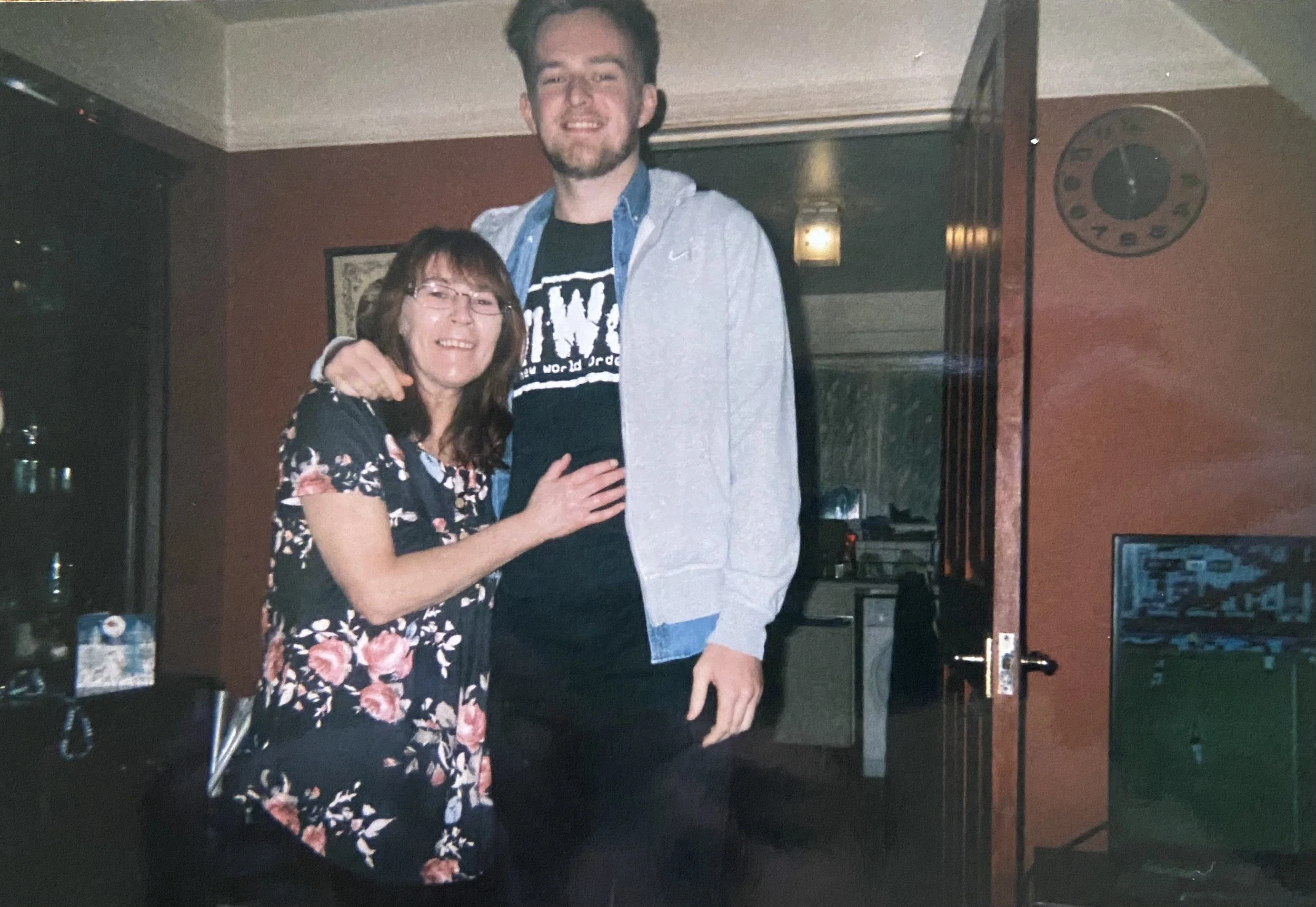
As I went through life, I met people and heard about the experiences that shaped them. Someone lost their best friend when they were 18 to suicide, someone else had an alcoholic Dad, someone else experienced significant trauma in the army and so on.
All of these, from my perspective were normal as it was the only way I had known and understood these people.
They weren’t experiences I went through personally; they were experiences told to me by the person who did. So, it was a normal part of my life that these significantly difficult things happened. I didn’t know exactly how to support these issues as I hadn’t experienced them personally. I know I just felt if they were talking, smiling and interacting with people then things were seemingly as okay as they can be. This issue of normality shouldn’t be a difficult to one to contend with, but since losing Mum, this normality of life has become one of the most difficult aspects of grief.
Moving past the 1st year
Mum died in such a shocking way, she collapsed from a cardiac arrest and within 3 weeks she was gone. This was very much not normal, to me, my family, my friends or anyone. People responded to that as well. The wave of support, the conversations, cards and words of support flooded in to recognise how abnormal this event was. The sudden nature of this made me feel that this was never going to be normal, and there was a lot of comfort to be found in that. I had lost the strongest person I ever knew without any warning; how could it ever feel normal? For a long time, because of the way life planned out, it still didn’t feel normal. It was just before the 6-week summer holidays, so I was back in London, and then went to Madrid to see my old university housemate, went to Rome a couple of weeks later, even went to a Taylor Swift concert and ran my first Half Marathon with my cousin. Despite what happened, it was such a lovely 6 weeks and I really felt that I wanted to experience life for her. The summer holiday ended, and I was back at work. I had only returned to work for about 4 weeks after Mum had passed in the summer term, so this new academic year – it was still very fresh in everyone’s minds. The months went on and I could feel the adrenaline of the shock carrying me through and wanting to experience life as much as possible. I booked another half marathon, finally went to America and made plans for a first marathon in Europe. Considering it was the first year without my Mum and with that carried so many new and weird and horrible feelings, it was as good as these things can be. However, something that did happen is my long-term relationship came to an end. This happened for many different reasons, and she is someone I’ll forever be grateful for with how she supported me during this time. But it happened and I decided instead of rushing to find a new room in London, I would move back in with my Dad in Hertfordshire. I knew I didn’t want to rush as the last year had been such a whirlwind and a lot had changed, being in the safety net of home and around my Dad would bring calmness and stability.
And it did, moving back home gave me breathing space. So much had changed in my life and I am so grateful to Dad for having me back. This was the first time I had genuine, intentional rest during that 6-week holiday. However, the way schools work, ‘New Years’ is never January, it is September (we all have a running joke that September is truly the time for new year’s resolutions, never January).
New classes, new colleagues, different rooms, all change. So, having been through a summer of change, going into the new academic year definitely felt very different and new for me personally. However, I was entering the second academic year since Mum passed away. This is something I didn’t really think much of as the year started. The fact Mum was gone was still absolutely fresh in my mind, but I was just going through the normal motions of starting the new school year.
However, with the new commute, being back in the childhood home and showing up to work every day started to take its toll on me more than I thought it would. I’m really proud of the fact that us as a family were strong in the face of such a shocking event. During that first academic year, I didn’t really have any sick days, and if I did, it was through genuine illness, not through feeling stricken by grief to the point I couldn’t move. Teaching is so all encompassing and all-consuming and whilst that is one of the professions greatest challenges, it is also one of the best things about it. It has proven to be one of the best distractions for me as when there are 30 students in one room, and I am responsible for their safety and learning, I don’t have the time to think about life’s wider problems. I am not complaining about this, students are wonderful as well. There have been many days where I have come in feeling quite down about everything that has happened, but a year 9 comes in making a silly and rubbish ‘67’ joke at the appropriate time, and it puts a smile on my face.
What I have realised is one of the consequences of coping quite well with grief during the first year is that people apply that to life moving forward, (To be clear, by coping well I mean the absence of public outcries, panic attacks and sick leave). This is very different to forgetting about it. I know no one has forgotten about my Mum passing away as people don’t forget significant events like that. However, people respond to the moves the griever makes. And the moves I was making suggested to others and myself that I was doing well. I had a good first year of grief all things considered, but I now look back and realise I was living in a bubble. That first year became a year of massive transition and moving back home, and life moving on made me realise this. That second 6-week summer was the first time I’d sat still with my grief and really saw the world around me, that coupled with being back in a place full of memories highlighted so much to me that I didn’t notice in the immediate. Her friends still go on holiday, laugh, see other friends. Walking around Hertfordshire, you see far more families around than in London, taller sons with their shorter Mums buying clothes for them starting sixth form or university in September. These were triggers, but it was interactions with people in the last 6 months that unlocked one of the scariest facets of this grief – this is normal now.
This is not a mission to guilt trip or make anyone I know feel bad about how they interacted, because ultimately it is a compliment that people treat me and speak to me normally. The alternative is a very sad reality where every conversation and interaction revolve around death and loss, which is something they and most definitely I do not want. However, it is scary to me that now, as I started the blog with, I am one of those people who lost their Mum. That is normal to many people now. Whenever I meet someone now, it will be normal to them that my Mum is dead, and that feels utterly unbelievable to me. When Mum first died, people who had lost a parent messaged me and a common message was ‘grief lurks’ or ‘grief comes in waves.’ I think the scenario I will explore encapsulates this well.
Facing the Normality
Among friendship groups, many silly, hypothetical conversations occur. This was one of them where the question was first posed: What would you do if you knew it was the end of days? This question then developed into ‘Would you rather know how you die or why you die? This is a conversation I am almost certain I have taken part of before, and one I actually found quite interesting to delve into. It is completely hypothetical, but it is genuinely interesting to wonder about these questions around mortality, and if we know the answers, would we do anything differently? However, grief was lurking for me when this conversation started and took place. I found the conversation incredibly triggering as many features of Mums death were hit on. Dying of a heart attack, dying younger than 60. I couldn’t bring myself to engage in the conversation, but I also didn’t know how to address this. I made an excuse and left the room the conversation was taking place in and didn’t really make anything of it. It was when I was on the train home, where I started to really think about Mum, the conversation, and how it was an example of this feeling of normality. That conversation doesn’t happen a day, 6 weeks or 6 months after she passes. But, as I have surpassed a year and have presented as largely fine all throughout, a consequence of that is people aren’t quite as aware of the significance of everyday conversations as I am. As someone once said to me, they don’t realise I think about Mum every day. In the same light however, they don’t think about my Mum everyday and that is a harsh but completely understandable facet of grief.
Now, I had a choice to make. I didn’t want to address it immediately I wanted to make sure I knew what to say before speaking to anyone about what I want, should that scenario come up again. Something that came to my mind was a voice note I was sent around the time of my Mums passing. I was feeling very stressed about Mums funeral as it was the morning after the Euros final. I did not feel like going into London on the Sunday night, but completely understood why my friends still wanted too. However, it was still an impossible feeling to shake. I told this to my old PE teacher, and he responded with a truly helpful insight into how his life has changed since a life-threatening cycling accident. He emphasised that other people simply have no reference point and true way of understanding what life is like for him now. This was helpful to hear at the time, but I didn’t resonate with him until it that interaction in the above paragraph happened. So, I called him and asked him questions about his experience. How does he feel that it’s normal to people now? Has he called anyone out on ‘forgetting’? He went onto give me the most amazing advice – he told me how people don’t realise the significance of the things they say and ask of him. They aren’t necessarily saying these things out of ill will, but out of pure lack of being able to truly understand the massive impact that accident had on his life. He said how he has pulled people up on it and in some cases, it has worked, and in other cases not much has changed. However, he insisted that it is so important to challenge these comments instead of ‘taking it on the chin’. He believed it is so important to not let resentment build without saying anything as that isn’t fair on friends. If these comments get challenged, and then positive changes happen then that is so valuable and only builds these friendships. If changes don’t happen, ultimately the relationship will shift. They won’t necessarily end, but if people are unable to show recognition, then it will lead to a shift.
This was an incredibly strange feeling to have as again, a fair bit of time had passed, and I hadn’t spoken to people in depth about my grief in a while, but I knew I couldn’t leave this behind. It would be unfair on the friends, and I know one of them in particular would hate the idea of me being upset without saying a word. So, I went for a coffee with her, spoke about everyday dramas and life, and then just before we were about to leave, I said, ‘I need to speak to you’. I explained how the conversation triggered me and caused me a lot of upset. The second I mentioned the conversation, the wave of realisation and guilt fell over her and she stressed how sorry she was that she didn’t realise. However, I stressed two things: I knew it wasn’t a conversation had with malicious intent and wasn’t angry at all. Also, I didn’t want anything to change. The latter was important to me: just because I raised this issue didn’t mean I now wanted people to tread on eggshells around me and start to assume I will get upset about anything because this will never be normal. I would hate that feeling of people feeling like they can’t speak around me in case they upset me. So, I said this:
“Should a conversation, or comment or something like that happens again that you think might upset me, don’t be awkward and address it immediately. If I am upset by something that is done or said, I will remove myself from the situation. If that does happen, please just make sure you check on me afterwards.”
My friend stressed how grateful she was for the practical advice. I think that was my biggest realisation when calling out the normality and the behaviour surrounding it. It is so hard to know how to address it, but where possible it is always best to give clear, practical advice on how to be supported rather than vagueness. I’d like to think that I was able to give that advice because I didn’t react in the moment; I took time to consider what it was I wanted and needed in that moment instead of choosing to create tension out of it. And, I have to stress that I had the strength to have this conversation because of the knowledge of how thoughtful that friend is and that she wouldn’t see this as a personal attack, but a way of helping her understand me and my grief more. When people say, ‘whatever you need, I’m always here’, this is the sort of thing it involves.
Again, this is just one example, it hasn’t always been this simple. There are many behaviours I should address that are far more nuanced and difficult than this situation was. But the issue of normality is an important one and something I think people need to be aware of. My main thought process was: Why is it that I am the one who has been through something so difficult like losing my Mum, and then I have to have enough strength to have that difficult conversation? How is that right? How is that fair? The people who have already been put through the ringer and tested to no end, also have to find the power to have a potentially difficult conversation. But it is so essential to do. My friends, particularly the friend I had the chat with always want to know how to support, but they are not mind readers. So, friends of grievers do appreciate it when they are given explicit, tangible ways to support.
This has been a very long blog and once again a lot of writing to explain what is ultimately, a very specific situation. I just hope those who are reading can think of someone in their lives who have been through something life-altering and give them a little bit more grace. I can’t speak for everyone, but I do know losing Mum had people reflect on their own experiences and how it’s transformed their view on the world. Be it a bike accident, a divorce in the family, a break-up. It is so important to recognise these things as the significant events they are rather than assume people are forever at peace with them. I know that the vast majority of people won’t be able to relate to the loss I experienced, it is so rare for any two people to be able to truly identify with one another as every loss and trauma is unique. It is for this reason that it truly means a lot when people share their experiences as a way of offering support. Chances are that people don’t want you to go to them ‘so tell me about your parents’ divorce’. But when the time is right, recognition that their life has been changed by this event can go such a long way. I hate that whenever I have kids, it will be normal to them that their grandma died back in 2024. So, I will always appreciate when people recognise that I am living that painful reality. The most important thing for someone going through grief, or more widely for people who have been through something transformative, is for them to feel seen and know they are heard. These events have a way of rearing their heads on a near constant basis.
Grief Constantly Lurking
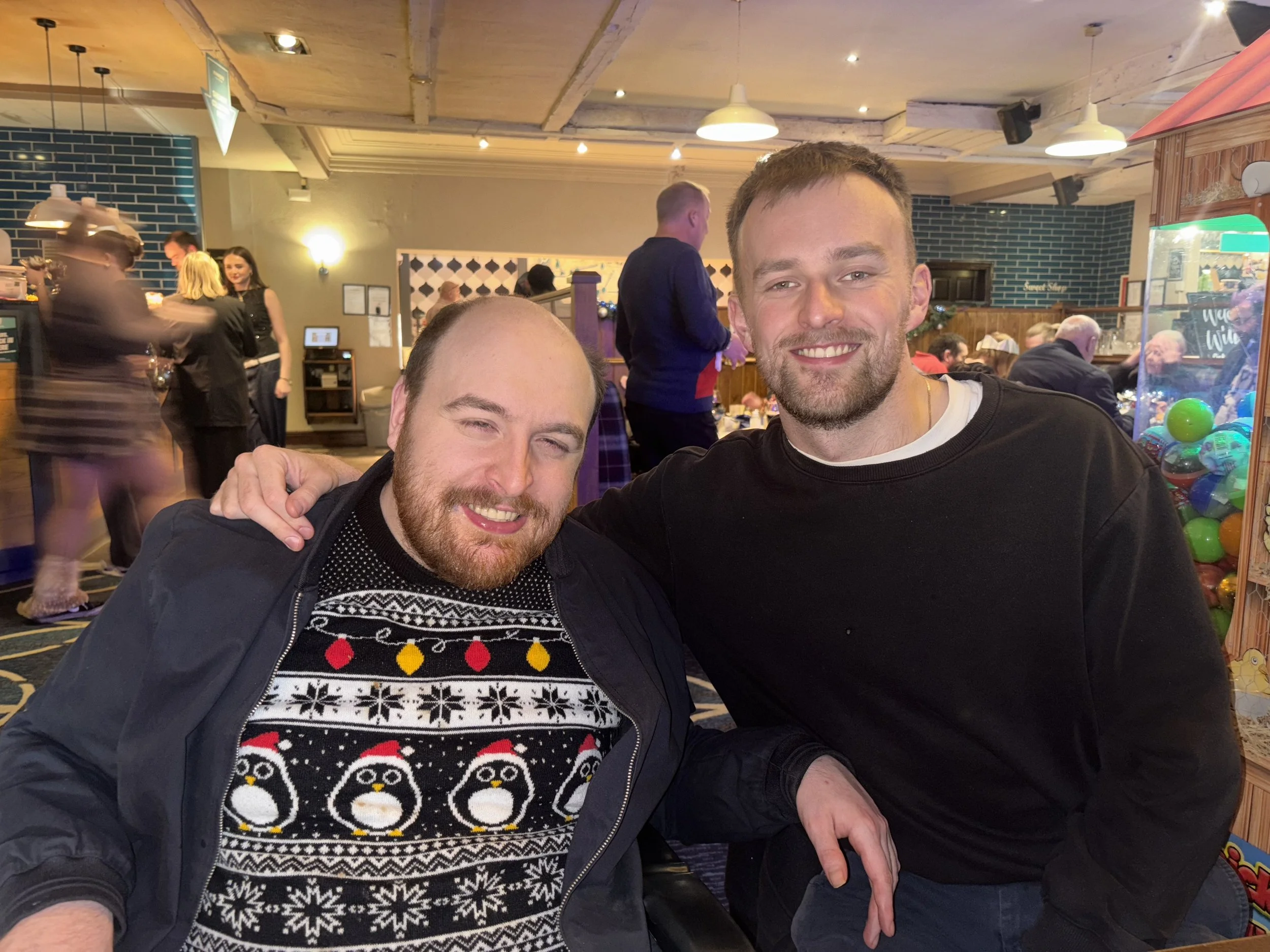
As I am writing this, it is the 2nd January, my birthday was on the 7th December and Christmas and New Years have just gone past.
These three events significantly highlight what is absent from my life and it is typically these events that highlight the troubles that people have been through. I walked into card factory a few days before the 25th and the first section I saw was ‘for Mum’.
The people surrounding me in that card shop would have no reason to know that I was upset in that moment as I didn’t say anything, and my body language didn’t change. I am including this though because this will be a constant trigger, every year for the rest of my life.
Just like the people in that card factory did not know about me being upset, there could have been people in there who are estranged from their Dad, lost a partner or distant from their siblings.
My point being, the way society is today, none of us had any way of knowing what we were all going through, what I’ve just said is pure speculation. For that reason, we should all approach people and situations with slightly more delicacy, softness and understanding.
The week and a half period that includes Christmas and New Year’s also emphasises how grief is always lurking.
I decided to go to Dublin with my friends for New Years and it truly was some of the funniest days I have had in a long time. However, on the plane home (on New Year’s Day), the sinking realisation came on me that it was another year without her.
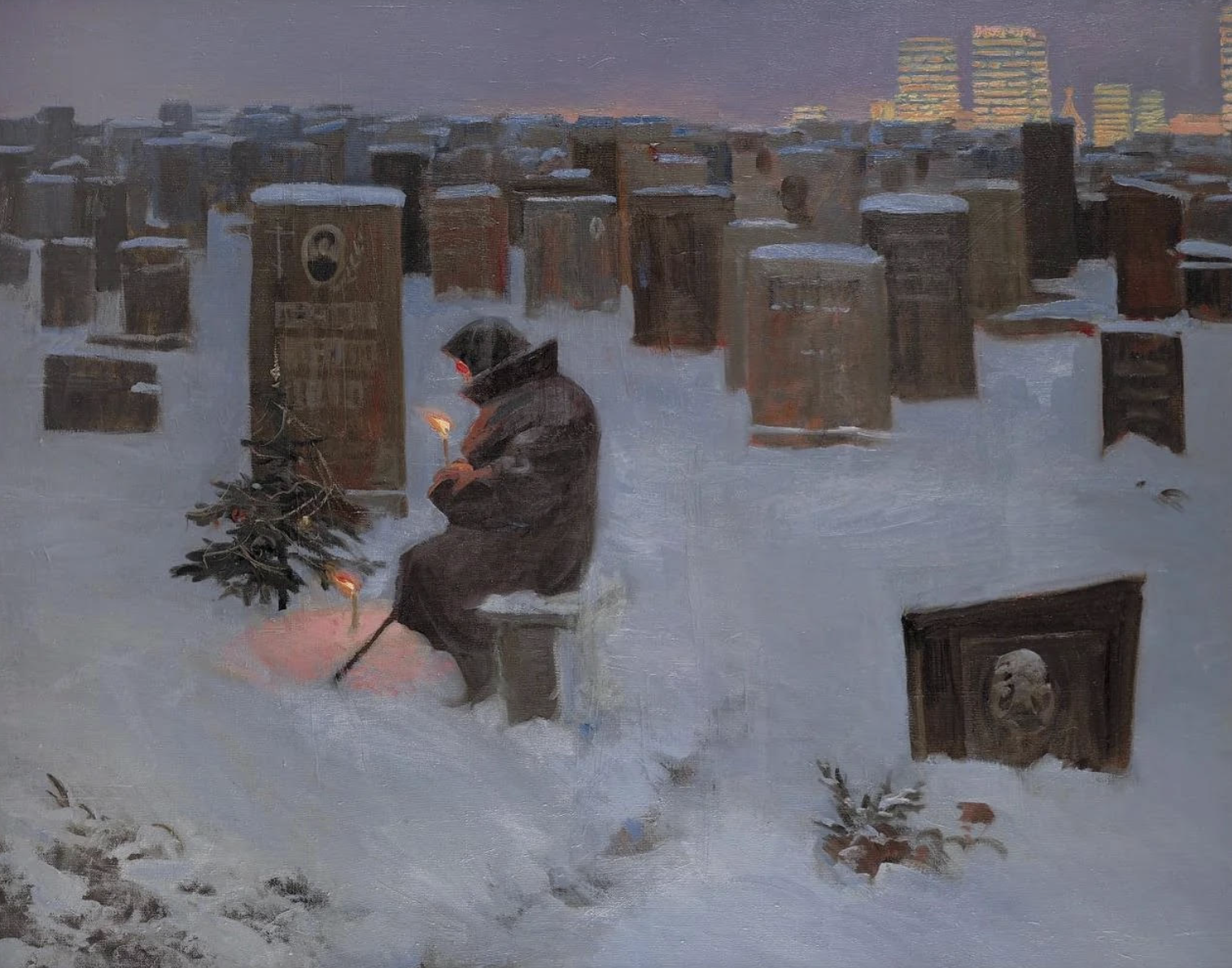
That rawness, the shock of her being gone was slipping further away now. I can no longer say ‘we lost Mum last year’, it is now ‘in 2024’. I remember having the exact same kind of feeling on New Years Eve, going into 2025, that I was entering my first ever year without Mum there. New Year’s is a time for celebration, but for so many grievers it is the starkest reminder of what is missing from this life.
Another chapter coming to an end of this life without their loved one. Anderson Cooper presented the New Year’s celebration in New York with CNN this year and shone a light on the grief this celebration presents.
‘Since I was a kid, I have dreaded this night, some of you may see these crowds and celebration and the people together and never feel so alone even if there are others around you. Maybe someone you love is sick or is gone and you long to feel them again. I just want you to know that in the midst of all of this merriment that you are not alone, you are not the only one.’
Traumatic episodes are always impossible to feel prepared for, even more difficult how to navigate dealing with trauma. Through going to school, and then onto teaching, I know students in good schools are given advice and tools on how to deal with problems such as puberty, online abuse and bullying. However, as we move through the education system and enter the working world and our 20s – there’s no playbook on how to navigate these experiences or emotions. It’s messy, complicated and difficult to know what to do and how to do it. Rachel Wilsons book Losing Young is one of the most powerful books I have ever read and has truly helped me understand the emotions I have experienced. However, I think it is a must read for everyone. For those going through grief and trauma, it offers stories and examples to offer people solace and comfort in the fact that the feelings they feel mean they are not alone. Potentially more powerfully, for those who haven’t been through the grief of losing a parent, this book, I’m sure would be a painful read, but would also be incredibly illuminating in realising just how wide the scope of grief is.
If you are reading this, you are already showing an active interest in wanting to understand either your own grief or support someone else who is grieving. What my own grief has taught me is that grief is not limited to death. If someone close to you tells you a story about their life, a story that has altered their outlook and perspective, sit and truly listen to them. If they are saying it in a frank way where they are fine, that might be the case. But understand there was a time in their lives, either in private or public where they weren’t able to be that frank and strong speaking that reality. They might have these silent moments like I had in Card Factory, where everything comes streaming back in an instant of what the reality of their life is like. It is not something we will ever get completely correct, but understanding how truly overwhelming the sense of normality can feel for people is, in my mind essential and will go a long way in helping all of us feel supported.