
To keep or not to keep? A question that you can’t always answer.
When your parent dies, the immediate future is like a chrysalis from the world. There’s a funeral to plan, your grieving starts (doubled if you’ve suffered from anticipatory grief prior to their passing), people to tell and a whole lot of sadmin. All of these things get jumbled up but also become connected as you learn how to live without them.
Once all of those things are done, you don’t emerge with the splendour of a butterfly and searching for an outlet for your grief can be tricky.
As we know, there is no right or wrong way to grieve, but what if you don’t feel like sitting in a dark room and crying all day? Though it’s not impossible, modern life makes it difficult to adopt a Victorian style of mourning, especially with social media (if you use it) making you hyper-aware of the world that continues to function when you don’t always want to.
So, if you feel like you want to be productive, even if it’s a coping mechanism to smudge your mind, your attention might turn to sorting through your parent’s possessions.
When we think about getting rid of a deceased loved one’s things, most people would imagine a grandparent’s house being cleared where maybe a few sentimental pieces or heirlooms are kept.
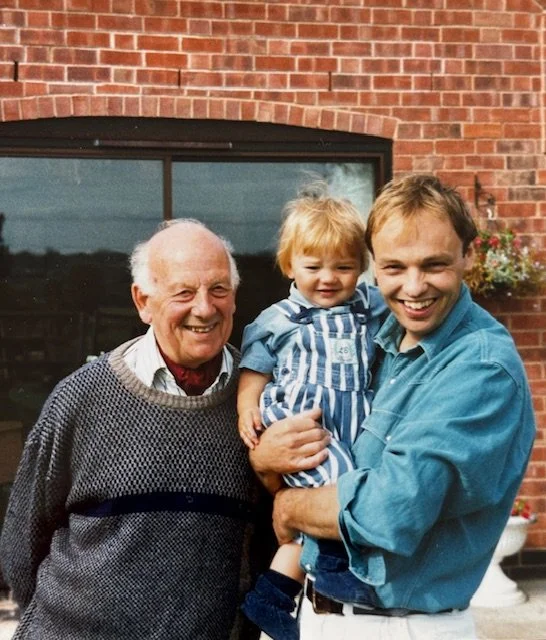
For most of us, losing a grandparent is our first exposure to death and though it hurts as they are a second base of love growing up (I still think of my Grandpa every day and he passed away over 16 years ago), their loss can be simpler to accept because they were likely older in years and naturally coming to the end of their life.
When someone is taken too soon, unable to live out a good life, the sting of them being gone has its own heartbeat. And, when you look around the home they’ve left behind, their belongings are reminders of the incompleteness of their lifetime.
Picking something up that they’ve worn a short time ago, or opening the bathroom cabinet and seeing something as unremarkable as their deodorant can trap your breath in your throat.
Asking yourself what to keep and what to get rid of isn’t an easy question to answer, nor is it one with a definitive answer.
Enthusiastically clearing everything might make your head feel lighter in the short term but as the months thread along, you could regret it. However, hoarding every last thing they owned might have an inverse effect, causing more pain than peace.
Like most areas of grief, a personal approach is often best. If you do feel ready to start downsizing their things, remember that slow and steady will win the (absent) race: rushing will inevitably cause mistakes but inaction can make it harder to get going.
Sadly, in the year running up to my Dad passing away, we had to use some adaptive equipment and personal care products for him. The day after he’d passed away, I went to our local refuse site and got rid of them.
Though medical aids are designed to make life easier for the person needing them, all they represented to our family was my Dad’s independence being taken away, so there was no reason to keep them.
Depending on how much stuff your parent had, knowing where to start is often the biggest barrier. Do you sort the valuable things first? Do you hold onto their clothes to make you feel closer to them? If they liked a certain item but you don’t, do you get rid of it or do you save it?
My Dad liked collecting things, so there have been times when Mum and I have felt torn. But, a feeling that repeated in me when we were sorting through his things was:
You are the ones left behind.
Holding onto everything connected to him was not (and still wouldn’t be) good for our grieving process. His phone, clothes, laptop, toiletries, old paperwork, books etc. were all gone within months of him passing away.
For lots of bereaved children, having a text or answerphone message from their parent comforts them. Last week, I unexpectedly came across a video I’d sent to Mum of Dad a few months before he passed away. My body and thoughts felt clamped together and I had to delete it.
Some might say that my desire to get rid of his things belied my emotional competence and was possibly a trauma response to his death. And, they might be right.
If life is about evolving, and the death of a parent forces you to evolve fast, then I treated the removal of most of his possessions as the end of that painful time in our family life.
But, this blog post isn’t an instruction manual; it’s a shared viewpoint.
A few sentences I hope will help:
If in doubt, don’t get rid.
The most expensive items might not be the most special.
Take your time. Sorting is exhausting.
It takes a second to throw something away or donate it, but it could take a lifetime to recover it.
Try and deal with the sadmin at the beginning, as it might stress you more later on.
If you’re unsure if an item is valuable, research it or take it to a reputable person.
There have been times where it was necessary for me to uncouple from how Dad would’ve felt about Mum and I clearing his things. I can hear him say “No, Jack, don’t get rid of that” or “You never know when you might need that.”
A part of me has felt selfish clearing, but I don’t want that awful time of Dad being poorly and passing away to become a still life in our home; the things that matter have been kept.
A few months ago, I came across a scrap of paper with his writing on and some old bank cards and if you’d have asked me a year ago if I wanted to keep them, I would’ve resolutely said “No.”
Yet, they are still in my drawer. They aren’t meaningful items, but maybe I was meant to come across them, for some reason.
Of course, photographs are hard. Mum finds the recent ones hurt more and I find the ones from years ago in the loft are harder. Grief is always unique.
I think Andy Warhol got it right: “The best thing about a picture is that it never changes, even when the people in it do.”
Bittersweet but true.